Safety Shot in Pool: What Is a Safety in Pool and How to Play One in 7 Easy Steps
Quick answer: A safety in pool is a legal defensive shot. You do not try to make a ball. Instead, you hit one of your own balls first, make sure a ball hits a rail after that, and leave the cue ball where your opponent has no good shot. A good safety can win you the game when you can not run out.
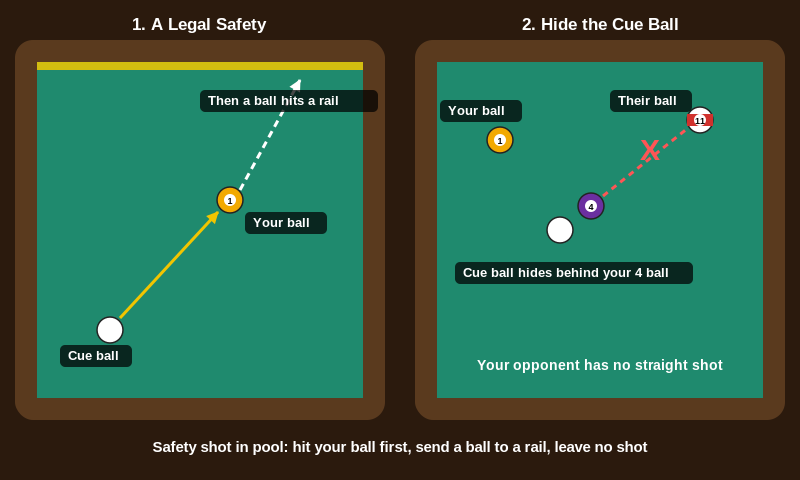
I have played pool for over 50 years. Like any sport, pool has offense and defense. Making balls is the offense. The safety is the defense. Players who learn to play safe take control of the table, even on racks they can not run.
What Is a Safety in Pool?
A safety (some people call it a safe or a safety shot) is a shot where your goal is to leave your opponent in trouble, not to pocket a ball. You still have to make a legal hit. Then your turn ends, and your opponent has to shoot from the bad spot you left.
The best safeties leave the cue ball behind another ball, far from your opponent's balls, or frozen on a rail. Your opponent may have to kick at a ball, and a weak kick can give you ball in hand.
The Number 1 Rule for Playing a Safety
Here is the rule I teach on our 8 ball safety play page: you must contact one of your balls first, and any ball has to contact a rail after that.
If you hit your ball too soft and no ball hits a rail after contact, that is a foul. Under ball in hand rules, your opponent gets the cue ball in hand, which gives them the upper hand and maybe the game. So a safety is not just a soft tap. It is a planned shot with the right speed.
Is a Safety Legal in Pool? What Is Calling Safety?
Yes. In the official billiard rules on this site, a safety shot is defined as a legal shot.
Calling safety: Those same rules say that if you want to pocket an obvious ball and still end your turn, you must say "safety" to your opponent before the shot. If you do not call it and one of your balls goes in, you have to shoot again. Any ball you pocket on a called safety stays down.
Rules change from place to place. If you play bar pool, also called straight 8, those rules do not believe in safeties. They say go for every shot. Most league and tournament pool is ball in hand, call pocket, and that is where safeties become a big part of the game. Check our 8 ball rules and billiard rules pages, and always agree on the rules before you play.
In 9 ball there is also the push out, a special rule right after the break. See our 9 ball rules page for how it works.
How to Play a Safety in Pool: 7 Easy Steps
Step 1: Look for Safeties First
A good habit is to look at the safeties on the table first. Then look for your shots. Do this every time you play and it will become second nature. It keeps you from getting so caught up in offense that you forget about defense.
Step 2: Decide: Run Out or Play Safe?
Ask yourself if you can clear the rack and win. If your balls are tied up in clusters, or your next shot is very hard, plan a safety instead of a wild guess.
Step 3: Use My Rule of Thumb
If I can make the safety with pretty good certainty, and the shot to pocket a ball is tough and I am not that sure, I play safe. If the safety is as hard or harder than making the shot, I play offense and go for the shot.
Step 4: Pick Where the Cue Ball Will Hide
Find a ball to hide behind, or a spot far from your opponent's balls. Picture where your opponent will stand and ask, "Can they see any of their balls straight on?" If not, you have a good safety.
Step 5: Plan the Legal Hit
Pick which of your balls you will hit first and which ball will go to a rail after contact. Do not forget this part. A great hiding spot means nothing if the shot is a foul.
Step 6: Control Your Speed
Most safeties are soft shots, so speed is everything. Too soft and nothing reaches a rail. Too hard and the cue ball rolls out of its hiding spot. Use a smooth, steady stroke. Our cue ball control and stop shot in pool pages help you put the cue ball where you want it.
Step 7: Stay Down and Watch
Stay down until the balls stop. Did your ball reach the rail? Did the cue ball land where you planned? Learn from every safety, good or bad.
When to Play a Safety in 8 Ball
- When you can not run out. If you do not feel you can play shape to get out, plan where your safety fits into your game plan.
- When you missed a break out shot. If your cluster did not open up and you have a tough shot or no shot, play it safe and smart.
- Before you clear all your balls. Never make all but one or two of your balls and then leave your opponent a shot. A rack with no balls in the way is very easy to run, even for an average player. I call that 8 ball suicide. Get safe or get out.
- When your opponent is hooked and the safety is easy. Make them kick. See our kick shot in pool page for the other side of that fight.
When to lay down and when to run out is a big part of my book 8 Ball Winning Strategies. It covers safeties, getting safe or getting out, break out shots, and planning your run out, with video examples. Learn more on our 8 Ball Winning Strategies page.
Watch a Safety Play Lesson
I have a Pool Skool video lesson on safety play with good examples of safeties for your next games. Watch it on our 8 ball safety play page.
Safety Shot Practice Drill
Put one of your balls near the middle of the table and a few other balls around it. From ball in hand, try to hit your ball, send a ball to a rail, and hide the cue ball behind another ball. Do it ten times. Count how many were legal and how many left no straight shot. Then move the balls and try again.
Your how to shoot pool basics still matter on soft shots: chalk, stance, a smooth stroke, and stay down.
Common Safety Mistakes
- Hitting too soft. If no ball hits a rail after contact, it is a foul and ball in hand for your opponent.
- Hitting the wrong ball first. You must contact one of your own balls first.
- Not calling safety on an obvious ball. Under the official rules on this site, if you do not call it and a ball drops, you must shoot again.
- Only thinking offense. Look at the safeties first, then the shots.
- Clearing your balls and leaving a shot. Leave some of your balls on the table as blockers until you are sure you can win.
Learn the Fundamentals Free
A good safety needs a steady stroke and good speed control. Our free 7 part pool fundamentals course covers the basics one lesson at a time by email. Sign up on our free pool lessons page. You can also read a lesson from the course on our billiards instruction page.
Safety in Pool FAQ
What is a safety in pool?
A safety is a legal defensive shot. Instead of trying to make a ball, you hit one of your balls first, send a ball to a rail, and leave your opponent with no good shot.
What is the rule for a safety shot in pool?
You must contact one of your balls first, and any ball has to contact a rail after that. If no ball hits a rail after contact, it is a foul and your opponent gets ball in hand under ball in hand rules.
What does calling safety mean in pool?
Under the official rules on this site, if you want to pocket an obvious ball and still end your turn, you say "safety" before the shot. If you do not, and one of your balls goes in, you have to shoot again.
Is playing a safety legal?
Yes. A safety shot is a legal shot under the official rules on this site. Bar rules (straight 8) are different and do not believe in safeties, so agree on the rules before you play.
When should you play a safety?
Play safe when you can not run out, when your break out shot did not work, or when the safety is easier than the shot. If the safety is as hard or harder than the shot, go for the shot.
What is a good safety shot?
A good safety is legal and leaves your opponent with no straight shot at any of their balls, often by hiding the cue ball behind another ball or leaving it far away from their balls.
Know someone learning pool? Post this safety shot page on X.

Tips, rules, and drills to play better pool