8 Ball on the Break: Do You Win or Lose? 7 Rules to Know
Quick answer: If you make the 8 ball on the break, it depends on the rules you play. Under the official BCA rules, it is not a win. You can rack the balls again, or spot the 8 and keep shooting. In APA, TAP, and most other leagues, it is a win. If you make the 8 and scratch on the break, APA says you lose, but the official rules give your opponent a choice instead.
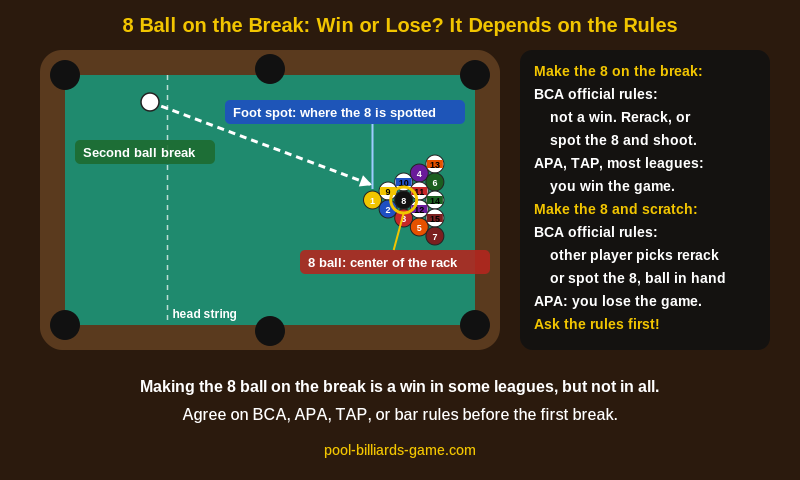
Few things in pool feel better than seeing the 8 ball drop on the break. Then the arguing starts. One player says, "I win!" The other says, "No, you have to spot it." Who is right? It all comes down to the rules you agreed on before the first break.
I have played pool for over 50 years, and I have played in leagues and tournaments for over 38 years. The rules below come from the official rules on our official billiard rules page and my league answers on our billiard rules page.
What Does 8 Ball on the Break Mean?
In 8 ball, the 8 ball is racked in the center of the rack. On the opening break, the balls spread out. Once in a while, the 8 ball rolls into a pocket on that first shot. That is called making the 8 ball on the break. Some players also say sinking, dropping, or potting the 8 on the break. See our how to rack pool balls page to set up the rack the right way.
8 Ball on the Break: Win or Lose?
Here is the short answer for each set of rules:
- BCA (official rules): Not a win. The breaker can rerack, or spot the 8 and keep shooting.
- APA, TAP, and most other leagues: A win.
- Make the 8 and scratch, official rules: Not a loss. Your opponent picks a rerack, or spots the 8 and shoots with ball in hand behind the head string.
- Make the 8 and scratch, APA: A loss.
If you play in a league, check which rules your league uses. Rules change, so check the newest rule book.
7 Rules for the 8 Ball on the Break
These come from the rules already on our site.
1. Official BCA Rules: The 8 on the Break Is Not a Win
Under the official rules, if the 8 ball goes in on the break, the breaker may ask for a rerack, or have the 8 ball spotted and keep shooting. As I tell my readers, in the BCA you can choose to spot it and try to run out, or re-rack the balls.
2. APA, TAP, and Most Leagues: The 8 on the Break Is a Win
The 8 on the break is not a win in the BCA league. It is a win in TAP, APA, and most other leagues. So before you break, ask, "What rules are we playing?"
3. Make the 8 and Scratch on the Break (Official Rules)
The break is the one time you can make the 8 and scratch and not lose under the official rules. If the breaker makes the 8 and scratches, the other player chooses. They can have the balls racked again, or spot the 8 and shoot with ball in hand behind the head string. Read more about a scratch on the 8 ball.
4. Make the 8 and Scratch on the Break (APA)
APA is different. You can win or lose the game on the break in APA. If you make the 8 on the break and scratch, you lose the game.
5. Where Does the Spotted 8 Ball Go?
A spotted ball goes on the foot spot. That is the spot where the front ball of the rack sits. If other balls are in the way, the 8 goes on the long string, the line through the foot spot, as close to the foot spot as it can.
6. The Table Is Still Open After the Break
Under the official rules, the table is always open right after the break. No one has stripes or solids yet, even if balls went in. You get your group when you make a called ball after the break. Under bar rules, a ball made on the break may pick your group.
7. Knock the 8 Off the Table and You Lose
Under the official rules, you lose the game if you jump the 8 ball off the table at any time. That counts on the break too. Jumping any other ball off the table on the break is a foul.
What Makes a Legal Break in 8 Ball?
The 8 ball rules above are for a legal break. Under the official rules, the breaker shoots from behind the head string and must do one of two things:
- Pocket a ball, or
- Drive at least four numbered balls to the rail.
If the break is not legal, it is a foul. The other player can take the table as it is, or have the balls racked again. Then they can break, or make you break again. The opening break is not a called shot. If you make a ball on a legal break, you keep shooting. Read more on our 8 ball rules and pool scratch rules pages.
How to Make the 8 Ball on the Break
No break makes the 8 every time. But some breaks give you a better chance. Here is what I teach on our how to break in pool page:
- Start with a tight rack. The 8 goes in the center, and the balls must touch. A loose rack will not spread.
- Try the second ball break. Set the cue ball about one ball width off the side rail. Hit the second ball in the rack nice and full. This break was taught to me years ago by Tom Rossman, Dr. Cue, and it gives you a pretty good chance to make the 8 ball.
- Watch the cue ball. This break is tricky, because you can hop the cue ball off the table.
- Use the same pre shot routine every time: get lined up, get set, pause, and finish.
Watch the Second Ball Break
In the video below, I break 8 ball with the second ball break and the head ball break. Watch for the break where the 8 ball drops.
Ask Before You Break
The 8 ball on the break can win a game in one league and only spot the 8 in another. So settle it before the first break. Ask, "Are we playing BCA, APA, TAP, or bar rules?" Also agree on who breaks first. Our lag in pool page shows how. Under the official rules, any foul must be called before the next shot is taken. See our pool fouls page for the full list.
Win More Games of 8 Ball
Making the 8 on the break is fun, but you cannot count on it. Most games are won by running out the rack. My book 8 Ball Winning Strategies shows you how to plan your rack and finish on the 8. Learn more on our 8 Ball Winning Strategies page, and see our 8 ball strategy tips.
Shopping for a pool player? See our pool gifts for players.
Learn the Fundamentals Free
Our free 7 part pool fundamentals course covers stance, bridge, stroke, and more, one lesson at a time by email. Sign up on our free pool lessons page.
8 Ball on the Break FAQ
Do you win if you make the 8 ball on the break?
It depends on the rules. Under the official BCA rules, it is not a win. You can have the balls racked again, or spot the 8 and keep shooting. In APA, TAP, and most other leagues, making the 8 on the break is a win.
Is the 8 ball on the break a win or a loss?
Under the official rules, making the 8 on the break is never a loss, even if you scratch. In APA, it is a win, but if you make the 8 and scratch on the break, you lose the game.
What happens if you make the 8 ball on the break and scratch?
Under the official rules, the other player chooses. They can rack the balls again, or spot the 8 and shoot with ball in hand behind the head string. In APA, making the 8 and scratching on the break is a loss.
What does it mean to spot the 8 ball?
Spotting the 8 means you take it out of the pocket and set it on the foot spot. That is the spot where the front ball of the rack sits. If another ball is in the way, the 8 goes on the long string as close to the foot spot as it can.
Do you have to call the 8 ball on the break?
No. The opening break is not a called shot. Under the official rules, if you make any ball on a legal break, you keep shooting.
Is the table open after you make the 8 on the break?
Yes, under the official rules. The table is always open right after the break, even if balls went in. You get stripes or solids when you make a called ball after the break.
How do you make the 8 ball on the break?
No break makes the 8 every time. The break I use most is the second ball break. Set the cue ball about one ball width off the side rail and hit the second ball in the rack nice and full. Be careful, because the cue ball can hop off the table.
Know someone who argues about the 8 ball on the break? Post this page on X.

Tips, rules, and drills to play better pool